

Shetland's historic highlights: 4000 years from Jarlshof to the Shetland Bus
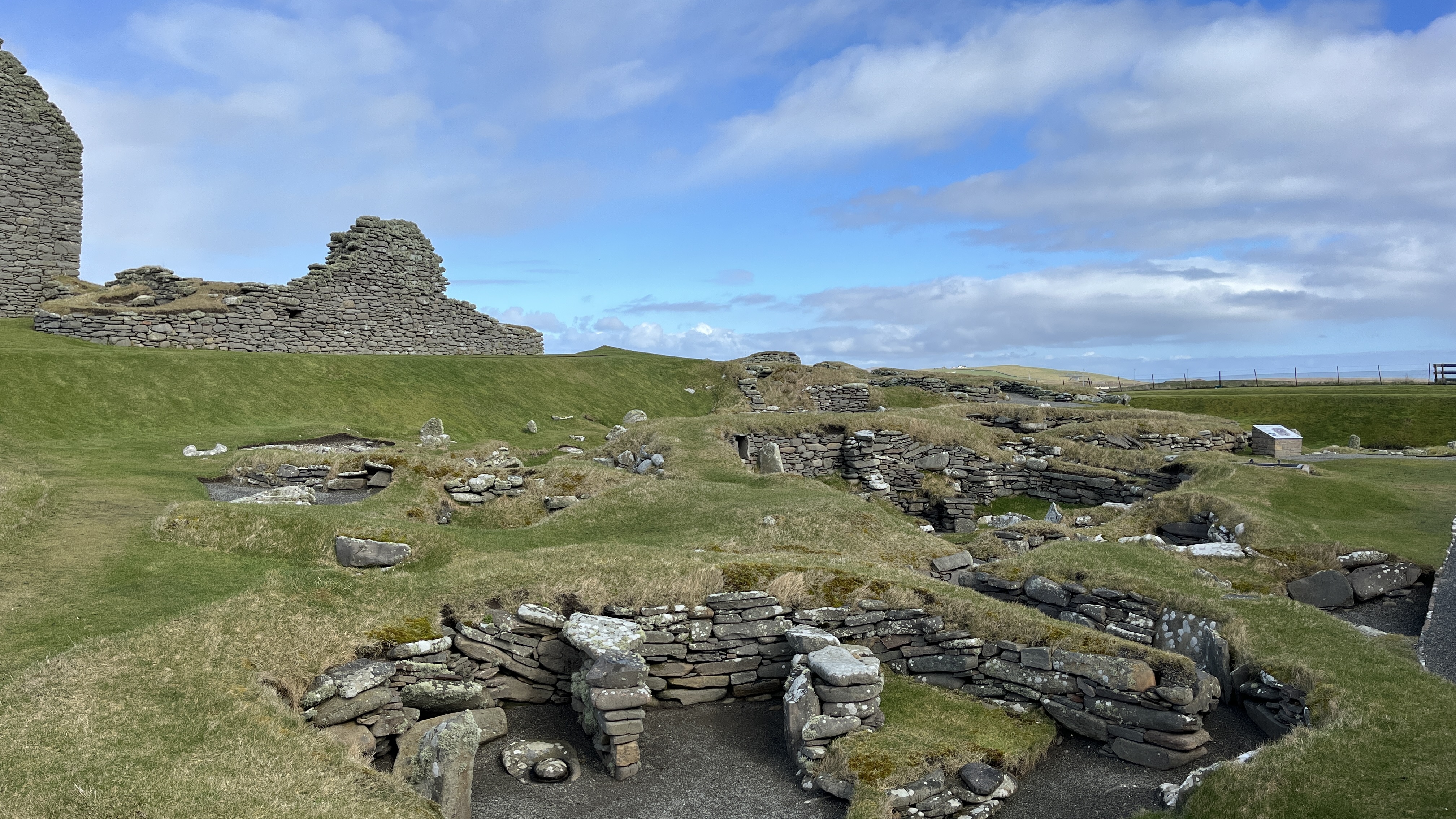
At Jarlshof, on the southern tip of Shetland's mainland, Neolithic farmers, Bronze Age smiths, Iron Age broch-builders, Norse settlers and a 16th-century Scottish laird all built on exactly the same patch of ground, one after another. It's a good place to start, because Shetland's history isn't really a list of sites — it's one long story, and the same handful of themes keep resurfacing right up to the Second World War.
Neolithic and Bronze Age
The earliest farming families in Shetland's story:
- Jarlshof: The first small stone houses here date to around 2700 BC. Bronze Age settlers followed from around 2000 BC, leaving oval-shaped houses and a smithy dated to roughly 800 BC — a settled, working community long before written history begins.
Iron Age Shetland: the Age of the Brochs
Tall, drystone round towers found only in Scotland, and nowhere in greater concentration than here:
- Jarlshof's broch and wheelhouses: Built directly over the earlier Bronze Age settlement, adding another layer to the same site.
- Clickimin Broch: A broch tower on a small loch-side islet on the edge of modern Lerwick, once reachable only by a narrow causeway.
- Mousa Broch: Built around 100 BC on an uninhabited island off the east coast, and still standing close to its full original height — the best-preserved broch anywhere in Scotland.
We still don't know for certain whether brochs were built mainly as defensive strongholds or as displays of status — quite possibly both — but their sheer scale tells you these were serious, permanent communities.
Pictish Shetland
Less survives above ground from this period, but what's been found is extraordinary:
- St Ninian's Isle: Connected to the mainland by Britain's largest sand tombolo (see header photo). In 1958, a local schoolboy helping on an archaeological dig uncovered a hoard of 28 silver and silver-gilt objects — brooches, bowls and weaponry — buried beneath the floor of a later medieval chapel. Dated to the second half of the 8th century, it's among the finest surviving collections of early medieval Pictish silverwork found anywhere in Scotland.
The Viking Age
Norse settlers began arriving from around AD 850, and the story is written into the landscape and the place-names alike:
- Unst: Britain's northernmost inhabited island, and thought to have been the Norse settlers' first landfall in Shetland. Over sixty Viking longhouse sites have been identified here, and a full-size replica longship, the Skidbladner, stands at Haroldswick today.
- Jarlshof's Norse longhouses: Built directly over the earlier broch and wheelhouses, and lived in for some four centuries.
- Lerwick's name itself: From the Old Norse for "muddy bay." Norn, Shetland's own Norse-derived language, was still spoken here as late as the 18th century.
The Norse chapter ended for a very unromantic reason: money. In 1468–69, King Christian I of Denmark-Norway pawned Orkney and then Shetland to Scotland as part of his daughter Margaret's dowry — a debt meant to be repaid. It never was, and Shetland became Scottish by default rather than conquest.
The Stewart Earls
Scottish rule brought its own dramatic characters:
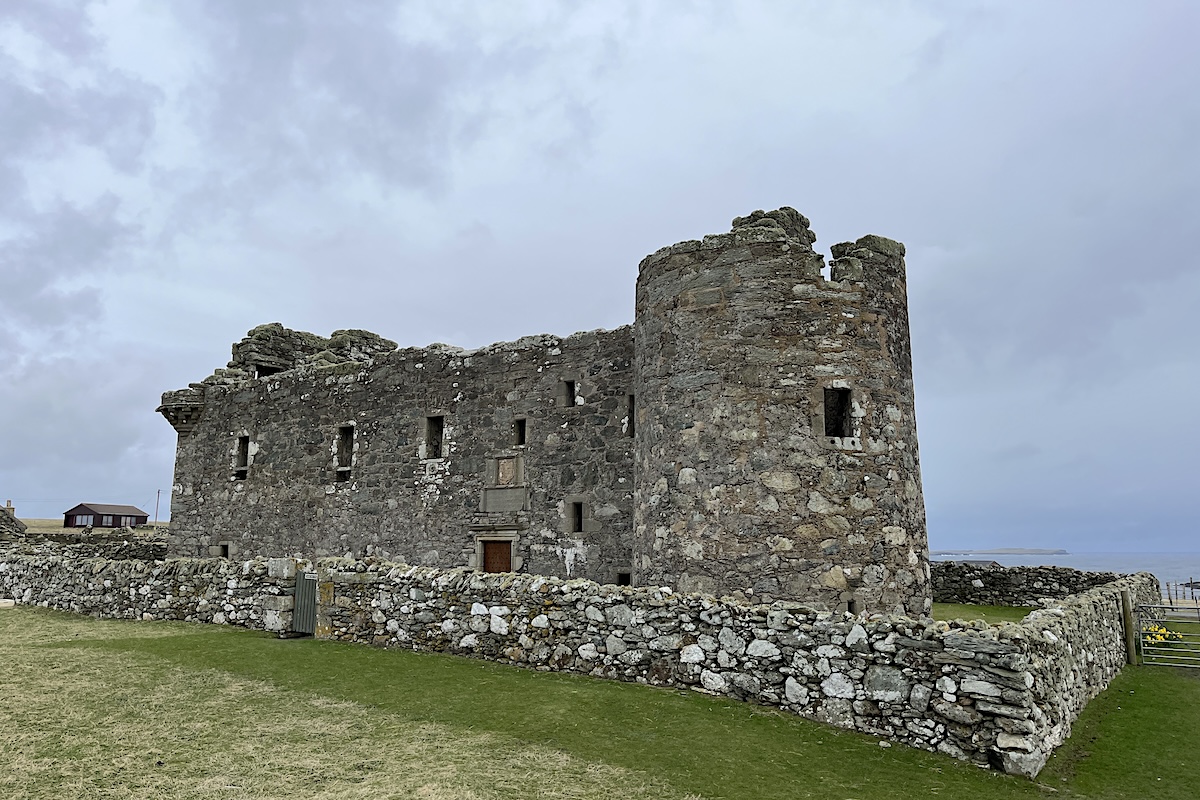
- Muness Castle, Unst: Britain's most northerly castle, built in 1598 for Laurence Bruce, a local sheriff — by most accounts partly to rival his own powerful nephew.
- Scalloway Castle: Built around 1600 using forced local labour for that nephew, Patrick Stewart, Earl of Orkney and Lord of Shetland — remembered locally as "Black Patie," and eventually arrested and executed for treason in 1615.
Between them, Muness and Scalloway still stand as the clearest physical reminders of just how harshly outside rule could sit on the islands in this period.
The Rise of Lerwick
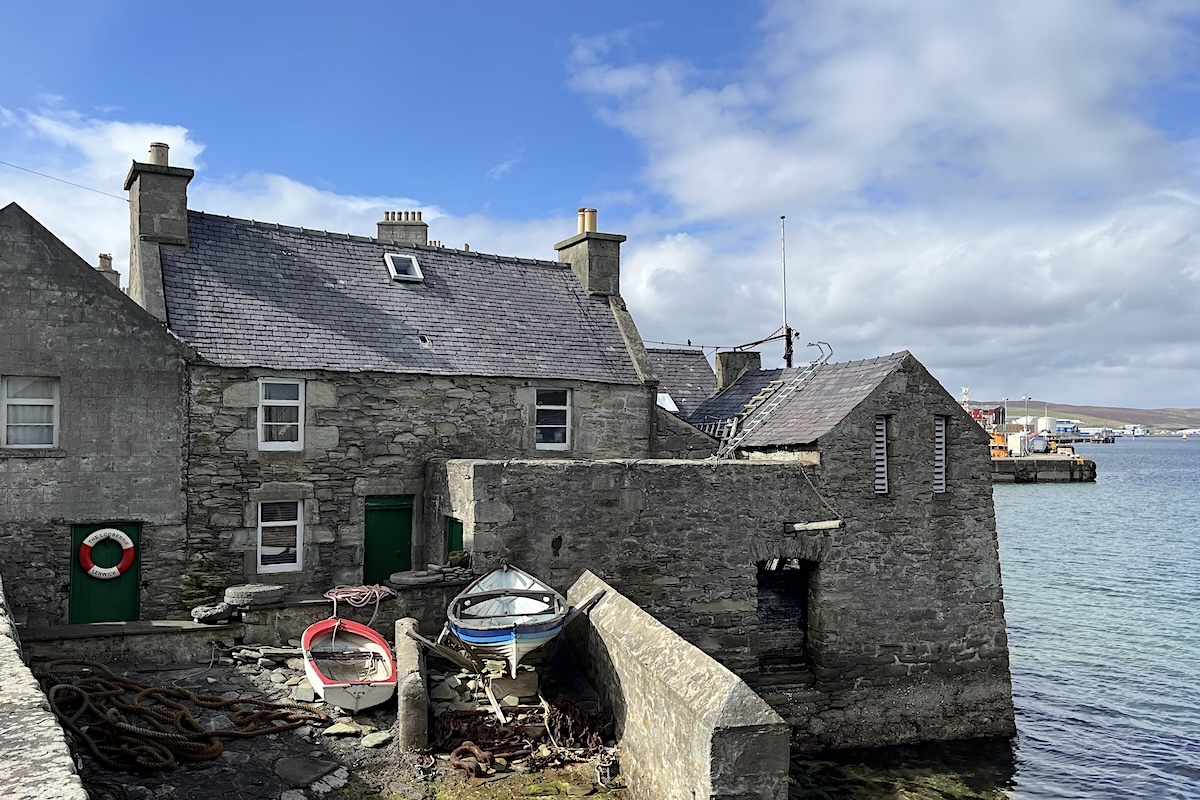
- Lerwick: It began life in the 17th century as a seasonal trading post for Dutch herring fleets gathering each summer in Bressay Sound. It continued to grow and by the early 1800s had overtaken Scalloway to become Shetland's capital in its own right — the waterfront lodberries, stone merchant houses built with their own private piers into the sea, still line Commercial Street today.
Into Living Memory
- The Shetland Bus: During the Second World War, Scalloway became the secret base for the Shetland Bus — small Norwegian-crewed fishing boats making clandestine North Sea crossings to supply the Norwegian resistance and bring refugees back to safety. Scalloway Museum tells the story of the roughly 200 missions run between 1940 and 1945, and the men and boats lost along the way.
Seeing this history for yourself
All of these locations can be explored independently by car (ferries required for visiting Unst) — with only light walking required to reach each site — if you have the time to plan the logistics.
However, if you prefer a private tour, many of the historic sites in this story are already a core highlight of my dedicated multi-day itinerary from Inverness: